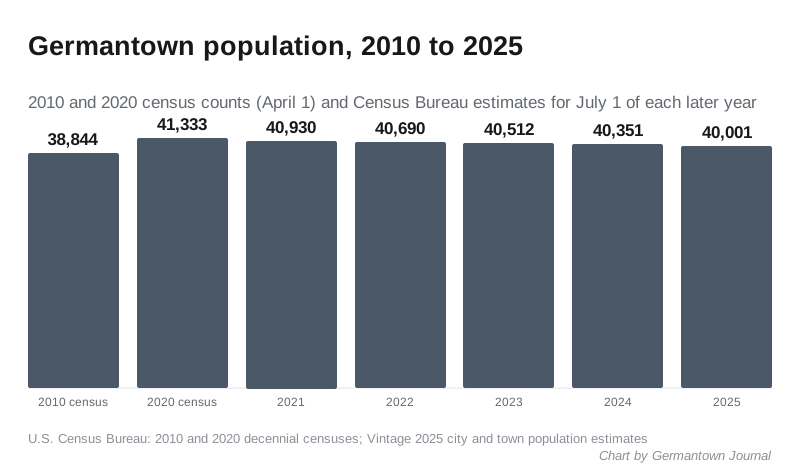
Germantown had an estimated 40,001 residents on July 1, 2025, down 3.2% from the 2020 census count of 41,333 but up 3% since 2010, Census Bureau figures show.
Last checked Oct. 17, 2026. Updated when the Census Bureau releases new figures. Sources: the 2010 and 2020 censuses, the Census Bureau’s Vintage 2025 city and town population estimates and the 2020-2024 American Community Survey five-year estimates. See also Census QuickFacts for Germantown.
Germantown had an estimated 40,001 residents on July 1, 2025, according to the U.S. Census Bureau. That is 3.2% below the 2020 census count of 41,333, and about 3% above the 2010 census count of 38,844. The city grew through the 2010s and has lost a few hundred residents a year in the Census Bureau’s estimates since 2020.
Who to call
- Census data questions: U.S. Census Bureau customer help, census.gov/about/contact-us
- City planning and the Thrive Germantown 2050 plan: Planning Division, 901-757-7281
- Germantown Municipal School District enrollment: 901-752-7900
Population since 2010
| Year | Population | Source |
|---|---|---|
| 2010 | 38,844 | Census, April 1 |
| 2020 | 41,333 | Census, April 1 |
| 2021 | 40,930 | Estimate, July 1 |
| 2022 | 40,690 | Estimate, July 1 |
| 2023 | 40,512 | Estimate, July 1 |
| 2024 | 40,351 | Estimate, July 1 |
| 2025 | 40,001 | Estimate, July 1 |
Germantown and its neighbors
| Place | 2010 census | 2020 census | 2025 estimate | Change since 2020 |
|---|---|---|---|---|
| Germantown | 38,844 | 41,333 | 40,001 | -3.2% |
| Collierville | 43,965 | 51,324 | 51,909 | +1.1% |
| Bartlett | 54,613 | 57,786 | 56,416 | -2.4% |
| Lakeland | 12,430 | 13,904 | 14,422 | +3.7% |
| Arlington | 11,517 | 14,549 | 15,703 | +7.9% |
| Memphis | 646,889 | 633,104 | 609,647 | -3.7% |
| Shelby County | 927,644 | 929,744 | 910,226 | -2.1% |
Collierville, Lakeland and Arlington have kept growing since 2020; Germantown, Bartlett, Memphis and Shelby County as a whole have shrunk in the estimates. Across the state line, Southaven, Mississippi, was estimated at 57,819 in 2025, up from 54,648 in 2020.
Who lives in Germantown
From the Census Bureau’s 2020-2024 American Community Survey, compared with Shelby County:
| Measure | Germantown | Shelby County |
|---|---|---|
| Population (survey estimate) | 40,673 | 919,173 |
| Median age | 44.3 | 35.9 |
| Households | 15,568 | 362,741 |
| Owner-occupied homes | 87% | 54% |
| Median household income | $149,920 | $63,767 |
| Per capita income | $75,765 | $39,083 |
| Median home value | $470,800 | $249,100 |
| Median gross rent | $1,816 | $1,232 |
| Adults 25+ with a bachelor’s degree or higher | 72% | 34% |
Germantown has about 16,106 housing units, and about three in four households (11,577) are family households. The average household holds about 2.6 people.
The survey figures are five-year averages with margins of error; the population estimate series above is the better guide to the city’s current size.
What this means for you
- Germantown is a mature, mostly owner-occupied suburb whose population has dipped slightly since 2020 while Collierville, Lakeland and Arlington grew.
- Residents are older and earn far more, on average, than Shelby County as a whole.
- The city’s Thrive Germantown 2050 comprehensive plan is gathering resident input on growth and land use; see city news.
Related: home prices, schools and moving to Germantown.
Frequently asked questions
What is the population of Germantown, TN?
The Census Bureau estimates 40,001 people lived in Germantown on July 1, 2025. The 2020 census counted 41,333.
Is Germantown, TN growing?
Not lately. Germantown grew 6.4% from 2010 to 2020, but Census estimates show it shrinking every year since, down 3.2% from the 2020 count by 2025.
What is the median household income in Germantown, TN?
$149,920 in the Census Bureau’s 2020-2024 American Community Survey, more than twice Shelby County’s $63,767.
What is the median age in Germantown?
44.3 years in the 2020-2024 American Community Survey, compared with 35.9 for Shelby County.
How many households are in Germantown?
About 15,568 households, 87% of them owner-occupied, with about 2.6 people per household, according to the 2020-2024 American Community Survey.
Have your say